


Key Takeaways
- Hemp bedding is the inner core (hurd) of the hemp plant, processed into an absorbent, low-dust material that's increasingly popular as a coop bedding alternative to pine shavings, straw, and sand.
- It controls ammonia odor better than most traditional beddings because it absorbs roughly twice its weight in moisture and locks it away from the surface, so the bacteria that produce that sharp ammonia smell have less moisture to work with.
- Compared to wood shavings, hemp is softer, virtually dust-free, and breaks down faster in compost, though it typically costs more up front and can be harder to find locally.
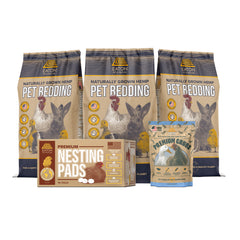
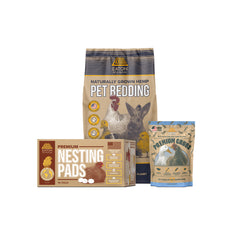
- Eaton Pet & Pasture's Naturally Grown Hemp Pet Bedding is a USA-grown, pesticide-free hemp bedding built for coops, brooders, and nesting boxes, making it a practical everyday upgrade for keepers who want a drier, less smelly coop with less frequent clean-outs.
What Is Hemp Bedding?
Hemp bedding is made from the hurd, or inner woody core, of the hemp plant — the same fast-growing, low-input crop known for everything from rope to textiles. Once harvested, the hurd is processed into small, absorbent pieces that can be used as animal bedding in coops, brooders, stalls, and small-pet enclosures.
Because hemp is a fibrous plant with a naturally hollow, sponge-like structure, it soaks up moisture quickly and holds onto it, rather than letting it sit on the surface where bacteria thrive. That's the core trait that makes it appealing for chicken keepers: a coop floor that stays drier tends to smell better, breed fewer pests, and require less frequent full clean-outs.
Hemp bedding has grown in popularity alongside a broader shift toward sustainable, low-dust bedding options, since it's biodegradable, compostable, and typically grown without pesticides or herbicides.
Pros and Cons of Hemp Bedding
Like any bedding material, hemp isn't automatically the right fit for every coop. Here's a balanced look at what it does well and where it comes up short.
Pros:
- Highly absorbent. Hemp can absorb roughly twice as much moisture as traditional bedding materials, which helps keep the coop floor drier for longer.
- Low-dust. Hemp bedding produces minimal to no dust, which is easier on chickens' respiratory systems — especially important for baby chicks and ducklings in a brooder.
- Soft and comfortable. Chickens (and their feet) tend to find hemp gentler underfoot than coarser materials like straw.
- Naturally forms light clumps. This makes spot-cleaning simpler, since soiled patches can be scooped out without disturbing the rest of the bedding.
- Compost-friendly. Hemp bedding has a neutral pH and breaks down faster than pine shavings, making it a strong choice for keepers who compost their coop waste.
- Grown without pesticides or herbicides. This matters for keepers who want to avoid introducing chemical residue into the coop or the eventual compost pile.
Cons:
- Higher upfront cost. Hemp bedding usually costs more per bag than pine shavings or straw, though many keepers find that the extended time between changes helps offset the difference.
- Less widely available. Not every farm store carries hemp bedding yet, so it may require ordering online rather than picking it up locally.
- New texture for some flocks. Chickens accustomed to straw or shavings may take a day or two to settle into a new bedding type, which is true of most bedding switches.
How Hemp Bedding Helps Reduce Odor (and Why)
The sharp, eye-watering ammonia smell in a poorly maintained coop comes from bacteria breaking down uric acid in chicken droppings, a process that accelerates in the presence of moisture. The wetter the bedding, the faster that bacterial activity — and the odor it produces — builds up. Poultry extension research backs this up directly: keeping litter dry is one of the most effective ways to keep ammonia levels down and support a healthier environment for the flock (Mississippi State University Extension).
This is where hemp's absorbency does the real work. Because hemp hurd can hold roughly twice its weight in moisture, it pulls dampness away from the surface and locks it into the material itself, rather than letting waste sit in a wet layer where ammonia-producing bacteria can multiply freely. A drier surface layer means slower bacterial breakdown, which translates directly to less odor.
Hemp's natural clumping behavior compounds this benefit. Because moisture-soaked areas clump together instead of spreading through the whole layer, spot-cleaning becomes far more effective — you can remove the wet, odor-causing clumps directly instead of sifting through evenly soiled bedding. That makes hemp especially well suited to the deep litter method, where the goal is to manage moisture and ammonia over weeks or months rather than doing a full clean-out every few days.
Getting this balance right matters in both directions — university extension guidance notes that litter that's too dry has its own downsides, since overly dry, dusty conditions can also contribute to respiratory issues in birds and the people caring for them (University of Tennessee Extension). A bedding that manages moisture without swinging to either extreme, like hemp, helps keep both odor and dust in check at once.
Hemp Bedding vs. Wood Shavings
Wood shavings, especially pine, have long been the default coop bedding, and they're a reasonable option. But stacked directly against hemp, a few differences stand out:
|
Hemp Bedding |
Wood Shavings |
|
|
Absorbency |
~2x absorption rate; stays dry longer |
Absorbs moisture but saturates faster |
|
Dust |
Virtually dust-free |
Can produce noticeable dust, a respiratory concern for chicks |
|
Texture |
Soft, cushioned underfoot |
Coarser; can contain sharp slivers |
|
Odor control |
Locks moisture away from surface, slowing ammonia buildup |
Requires more frequent changes to stay ahead of ammonia |
|
Composability |
Neutral pH, breaks down quickly |
Breaks down more slowly, especially pine |
|
Cost |
Higher upfront cost |
Generally cheaper per bag |
The dust difference alone is worth pausing on. Wood shavings, particularly cheaper or finer-cut varieties, can throw enough fine particulate into the air to irritate a chicken's respiratory tract over time — a bigger concern in brooders, where chicks' lungs are still developing. Occupational health guidance on poultry housing identifies routine tasks like spreading bedding and litter removal as common sources of the airborne dust linked to respiratory disease in both birds and handlers (UK Health and Safety Executive). Hemp's low-dust profile makes it a common recommendation for brooder setups specifically for this reason.
That said, wood shavings aren't a bad choice, and plenty of healthy flocks live on them. The tradeoff mostly comes down to how much you value drier bedding and less dust versus a lower price tag.
Why Eaton's Naturally Grown Hemp Pet Bedding Is the Ideal Choice
For keepers ready to make the switch, Eaton Pet & Pasture's Naturally Grown Hemp Pet Bedding checks the boxes that matter most in a coop bedding:
- Clean and pure. It's grown in the USA without pesticides or herbicides, so there's no chemical residue to worry about in the coop or the compost pile.
- Exceptionally absorbent. With roughly double the absorption rate of traditional bedding, it stays dry for extended periods — directly supporting the odor control described above.
- Low-dust. It's virtually dust-free, making it a strong fit for coops, nesting boxes, and especially brooders housing baby chicks or ducklings with sensitive respiratory systems.
- Soft and cozy. It's noticeably more comfortable underfoot than wood shavings, paper, or straw.
- Naturally clumping. Moisture forms light clumps, so spot-cleaning is quick and full clean-outs are needed less often — customers report it lasting anywhere from two to four months depending on flock size and coop setup.
- Deep litter method-friendly. Its absorbency and fast breakdown make it especially well suited to keepers using the deep litter method, where it helps keep the coop dry and reduces ammonia over the long haul.
- Sustainable and farmer-owned. Hemp is one of the most sustainable crops available, and Eaton's bedding is made in the USA by a farmer-owned company committed to minimal plastic packaging.
It also covers 12 square feet at 1 inch deep per bag (1 cubic foot), is safe for baby chicks and ducks, and is safe to add straight to the compost pile thanks to its neutral pH.
The Bottom Line
Odor, dust, and mess are the three biggest complaints backyard keepers have about coop bedding — and hemp bedding is built to directly address all three. Its high absorbency slows the bacterial activity behind ammonia smell, its low-dust composition protects respiratory health, and its natural clumping makes day-to-day maintenance easier than sifting through shavings or straw. For keepers looking to cut down on odor and clean-out frequency without compromising on comfort or sustainability, Eaton's Naturally Grown Hemp Pet Bedding is a practical, well-rounded upgrade for coops, brooders, and nesting boxes alike.
Ready to give your flock a drier, fresher coop? Shop Naturally Grown Hemp Pet Bedding →